
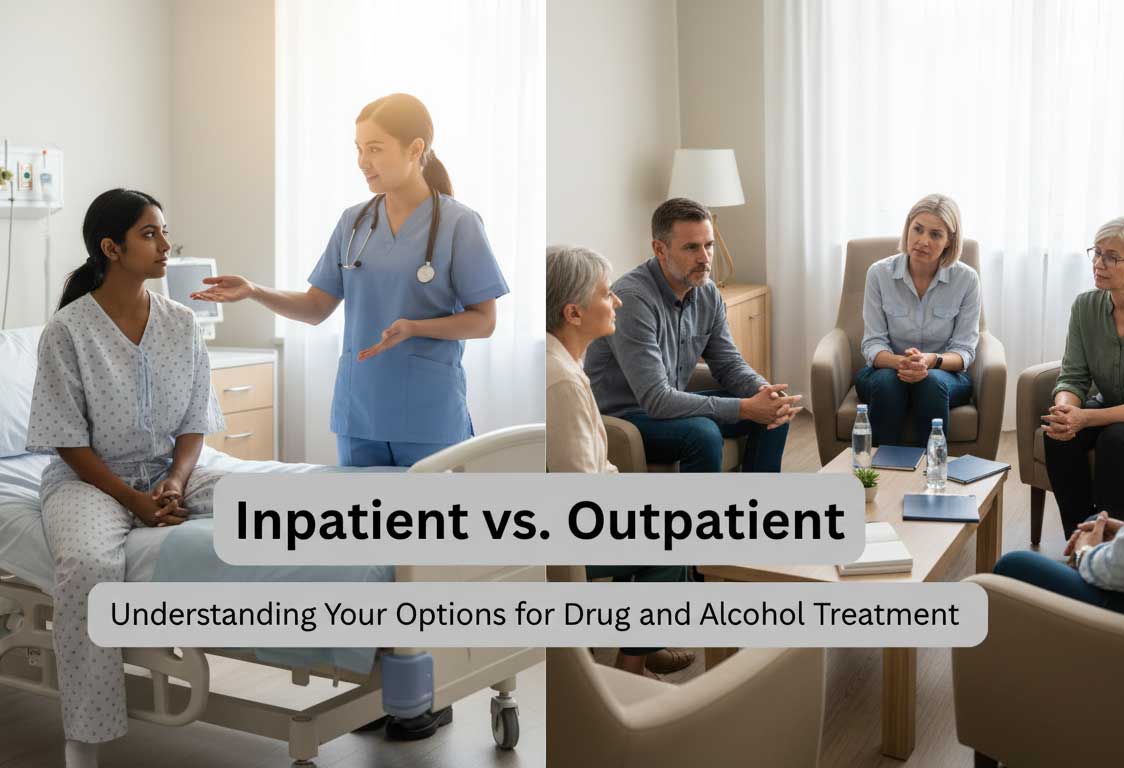
Choosing the right addiction treatment program is one of the most important decisions you or a loved one will ever make. Whether you’re just beginning to explore recovery options or you’ve been down this road before, understanding the difference between inpatient vs outpatient treatment is a critical first step. This guide breaks down both models clearly and compassionately, so you can make a confident, informed choice about the path forward.
What Is the Difference Between Inpatient and Outpatient Drug Treatment?
At the most basic level, inpatient vs outpatient treatment comes down to one core distinction: where you sleep. Inpatient programs, also called residential treatment, require clients to live at the facility for the duration of their program. Outpatient programs allow clients to live at home or in a sober living environment and attend treatment sessions on a scheduled basis.
But there’s far more to the comparison than geography. The two models differ significantly in structure, intensity, cost, flexibility, and the types of individuals they best serve. Understanding these nuances gives you a far clearer picture of which path may be right for your unique situation.
Both inpatient and outpatient treatment aim to achieve the same goal: lasting recovery from drug and alcohol dependence. The road they take, however, looks quite different.
Inpatient Treatment: A Closer Look
Inpatient, or residential, drug and alcohol treatment involves a full-time, structured stay at a dedicated facility. Clients eat, sleep, and participate in all therapeutic activities on-site. Programs typically last anywhere from 28 days to 90 days or longer, depending on clinical need and individual circumstances.
During inpatient care, clients are completely removed from their day-to-day environment. This can be particularly powerful when home life is chaotic, unstable, or filled with triggers and influences that contributed to substance use in the first place.
Key features of residential addiction treatment include:
- 24/7 medical supervision and support
- Structured daily schedules with minimal downtime
- Individual therapy, group therapy, and holistic treatment modalities
- Medically assisted detox (in many facilities)
- Complete separation from outside triggers and stressors
- Peer community living with others in recovery
The immersive nature of inpatient treatment makes it particularly well-suited for individuals with severe substance use disorders, co-occurring mental health conditions, or a history of relapse following less intensive treatment.
Outpatient Treatment: A Closer Look
Outpatient drug and alcohol treatment takes a fundamentally different approach. Rather than requiring clients to leave their lives behind, outpatient programs integrate treatment into everyday life. Clients attend therapy sessions, group programming, and clinical support during scheduled hours, typically during the day or evening, then return home afterward.
This flexibility makes outpatient treatment accessible to individuals who have work, school, parenting, or other responsibilities they cannot simply pause. It also creates a powerful opportunity to practice coping skills in real-world environments, rather than in a protected residential setting.
Outpatient programs exist on a spectrum of intensity:
- Standard Outpatient (OP): One to two sessions per week for counseling and support.
- Intensive Outpatient Program (IOP): Typically nine or more hours of structured treatment per week, often spread across three to five days.
- Partial Hospitalization Program (PHP): The most intensive outpatient level, providing up to 20–30 hours of structured programming per week while clients continue to live outside the facility.
At Discovery Transitions Outpatient, we offer a high-quality outpatient treatment program in Van Nuys, California, that provides the structure, clinical expertise, and individualized care necessary to support lasting recovery, without requiring clients to step away from their everyday lives.
Read more: How Long Is PHP Treatment? A Complete Timeline Breakdown
Inpatient vs Outpatient Treatment: Side-by-Side Comparison
The table below offers a clear, at-a-glance comparison to help you weigh your options:
| Feature | Inpatient (Residential) | Outpatient |
| Living Arrangement | 24/7 on-site residence | Live at home or sober living |
| Program Intensity | High (full-time programming) | Moderate to high (IOP/PHP available) |
| Duration | 28–90+ days | Varies; fully individualized |
| Work / School | Generally not possible | Often maintained |
| Family Access | Limited, scheduled visits | Daily access maintained |
| Medical Supervision | 24/7 on-site | On-site during treatment hours |
| Cost | Higher (room, board, care) | Typically more affordable |
| Privacy | Moderate | Higher; integrates with normal life |
| Real-World Practice | Limited during treatment | Immediate; skills tested daily |
| Best For | Severe addiction, instability, co-occurring disorders | Moderate addiction, stable support system, responsibilities |

Who Is Inpatient Treatment Best For?
Residential treatment is not universally the “gold standard” of care, the most effective treatment is always the one that appropriately matches the individual’s clinical needs. That said, inpatient programs tend to be best suited for certain profiles and circumstances.
You or your loved one may be a strong candidate for inpatient treatment if:
- Substance use is severe and long-standing, with significant physical dependency
- You require medically supervised detoxification before beginning therapy
- There is a history of multiple treatment attempts or relapses following less structured care
- The home environment is unstable, unsafe, or filled with active triggers and co-users
- You are experiencing co-occurring mental health conditions such as severe depression, anxiety, PTSD, or psychosis that require intensive management
- There is no strong support network in place outside of treatment
- Daily responsibilities can feasibly be paused for the duration of the program
According to the Substance Abuse and Mental Health Services Administration (SAMHSA), the appropriate level of care should always be determined through a comprehensive clinical assessment, not assumptions about severity based on substance type or length of use alone.
“The goal of treatment is not just sobriety, it’s rebuilding a life. The right program is the one that meets you where you are.”, Discovery Transitions Outpatient Clinical Team

Who Is Outpatient Treatment Best For?
Outpatient addiction treatment has long been mischaracterized as a “lesser” or “easier” option compared to residential care. In reality, outpatient programs, particularly intensive outpatient and partial hospitalization formats, can deliver equally rigorous, evidence-based care while offering significant advantages for the right candidate.
Outpatient treatment may be the ideal fit if:
- Your substance use disorder is mild to moderate in clinical severity
- You have a stable, supportive, and sober home environment
- You have work, school, childcare, or family obligations that prevent a residential stay
- You have already completed inpatient care and are stepping down to a less intensive level of support
- You are in the early stages of recognizing a substance use problem and want structured support
- Cost or insurance coverage makes residential treatment inaccessible
- You are motivated, accountable, and ready to engage fully with the therapeutic process
Research consistently shows that outpatient treatment, when clinically appropriate, produces outcomes comparable to residential care. Studies supported by the National Institute on Alcohol Abuse and Alcoholism (NIAAA) found that for many individuals with alcohol use disorder, structured outpatient care delivered comparable recovery rates to inpatient programs, with significantly lower costs and disruption to daily life.
The Power of Real-World Recovery
One of the most underappreciated advantages of outpatient treatment is the opportunity to practice recovery skills in the real world. When a client in outpatient care faces a stressor at work, a conflict in a relationship, or a social situation involving alcohol, they can bring that lived experience directly into their next therapy session.
This real-time feedback loop, living life and processing its challenges with clinical support nearby, often leads to deeper skill integration and more resilient long-term sobriety than a purely insulated residential environment can provide.
Understanding Levels of Care in Addiction Treatment
The addiction treatment field uses a tiered framework, largely standardized by the American Society of Addiction Medicine (ASAM), to define levels of care based on clinical need. Understanding these levels helps you navigate the treatment landscape with more confidence.
Level 1: Standard Outpatient
Fewer than nine hours of weekly services. Typically involves individual counseling and occasional group sessions. Best suited for early-stage or mild substance use problems, or as a continuing care option after completing a higher level of care.
Level 2.1: Intensive Outpatient Program (IOP)
Nine or more hours of structured clinical programming per week. Often includes group therapy, individual sessions, psychoeducation, skill-building workshops, and family involvement. IOP is one of the most widely utilized levels of care because it provides meaningful structure while preserving significant life flexibility.
Level 2.5: Partial Hospitalization Program (PHP)
Twenty or more hours of programming per week. PHP is often considered a “bridge” between inpatient and outpatient, providing near-residential intensity while allowing clients to return home each evening. Ideal for individuals stepping down from residential care or those who need a high level of support but cannot commit to full residential living.
Level 3: Residential Treatment
Full-time residential care with 24/7 clinical oversight. Encompasses both clinically managed and medically monitored residential programs of varying intensity.
Level 4: Medically Managed Intensive Inpatient
Hospital-based care for severe medical complications related to substance use or co-occurring psychiatric conditions. The highest intensity level of care, reserved for the most acute clinical situations.
The Role of Detox: Before Inpatient or Outpatient Treatment Begins
Before discussing inpatient vs outpatient treatment, it’s important to address detoxification. For many individuals with significant physical dependence on alcohol, opioids, benzodiazepines, or other substances, medically supervised detox is a critical first step, regardless of which treatment modality follows.
Detox is not treatment in itself. It is the process of safely managing acute withdrawal symptoms as the body clears itself of substances. Without medical supervision, withdrawal from certain substances, particularly alcohol and benzodiazepines, can be life-threatening and should never be attempted alone.
Most inpatient facilities offer on-site medically supervised detox. Many outpatient programs require that clients complete detox prior to beginning outpatient programming, either through a hospital, standalone detox center, or medically monitored setting.
If you are unsure whether you need detox before starting an outpatient program, a clinical assessment can determine your level of physical dependence and recommend the safest pathway forward. Our team at Discovery Transitions Outpatient can guide you through this process.
The Discovery Transitions Outpatient Approach
At Discovery Transitions Outpatient, we believe addiction is a three-fold illness, affecting the mind, body, and spirit, and that effective treatment must address all three dimensions simultaneously.
Our outpatient program in Van Nuys, California, is built on a foundation of individualized, evidence-based care delivered by a highly trained multidisciplinary clinical team. Here’s what sets our approach apart:
- On-site psychiatrist available to address medication-related needs and provide ongoing psychiatric management
- Multiple therapeutic modalities, our therapists are trained in a variety of evidence-based approaches, allowing them to tailor treatment to each person’s needs
- Weekly treatment plan reviews, every client’s plan is reviewed and updated weekly by the full treatment team to ensure ongoing relevance and progress
- Individualized duration, treatment length is never arbitrary; it is fully customized to each client’s circumstances and recovery trajectory
- Integrated care model, therapists, psychiatrists, and case managers work in close collaboration to provide seamless, whole-person support
Upon admission, each client receives an initial treatment plan developed from their intake assessment. Within the first few days, our multidisciplinary team collaborates directly with the client to build a comprehensive, personalized plan. Clients meet with the psychiatrist within their first week, and regularly thereafter, and connect with their primary therapist one to two times weekly to address evolving needs and set realistic goals.
Our primary goal is to help every client maintain their commitment to recovery while building the skills, insight, and support network necessary to live a productive, fulfilling life, free from drug and alcohol dependence.
After Treatment: The Importance of Continuing Care
Regardless of whether you complete inpatient or outpatient treatment, continuing care, also known as aftercare, is a critical component of sustained recovery. Research consistently demonstrates that longer engagement with treatment services is associated with significantly better long-term outcomes.
Continuing care may include:
- Stepping down through levels of care (e.g., residential → PHP → IOP → standard outpatient)
- Ongoing individual therapy with a licensed counselor
- Participation in peer support programs such as Alcoholics Anonymous, Narcotics Anonymous, or SMART Recovery
- Sober living or recovery housing arrangements
- Medication-assisted treatment with ongoing psychiatric management
- Alumni programs and recovery community engagement
At Discovery Transitions Outpatient, we work closely with each client to develop a comprehensive continuing care plan before they transition out of active treatment. The shift from active programming to independent recovery is one of the most vulnerable moments in the process, and we take it seriously.
Outpatient Care as a Step-Down from Residential Treatment
One of the most common and effective uses of outpatient programming is as a step-down level of care following inpatient or residential treatment. After completing 30, 60, or 90 days of residential care, many individuals benefit enormously from continuing in an IOP or PHP format as they re-integrate into daily life.
The structured touchpoints of outpatient care during this vulnerable re-entry period can make the critical difference between sustained sobriety and relapse. It provides accountability, ongoing clinical support, and a therapeutic community during the transition back to everyday responsibilities.
How to Choose: Inpatient or Outpatient Treatment?
The decision between inpatient vs outpatient drug and alcohol treatment should never be made casually or based solely on convenience. Ideally, it is guided by a thorough clinical assessment conducted by a licensed addiction professional, which considers:
- Severity of substance use, How long, how much, and what substances are involved?
- Physical dependence, Is medically supervised detox required?
- Co-occurring mental health conditions, Are there psychiatric diagnoses that need simultaneous treatment?
- Previous treatment history, What has or hasn’t worked before?
- Social and environmental stability, Is the home environment supportive and sober?
- Life responsibilities, Are there work, school, or family obligations to consider?
- Motivation and readiness, What is the client’s level of engagement and willingness?
- Financial and logistical factors, What is realistically accessible given insurance and resources?
There is no shame in any level of care. Seeking help at all, whether that’s a once-weekly counseling session or a full residential stay, is an act of extraordinary courage. What matters most is finding the right level of support for your unique situation and committing fully to the process.
If you are unsure where to start, our team at Discovery Transitions Outpatient in Van Nuys, CA is here to help. We offer confidential clinical consultations to help you understand your options and determine the right level of care for your situation. Call us anytime at (818) 824-5022.
Frequently Asked Questions About Inpatient vs Outpatient Drug and Alcohol Treatment
1. Is outpatient treatment as effective as inpatient treatment?
For many individuals, yes, outpatient treatment can be just as effective as inpatient care, when the client is clinically appropriate for that level of care. The most important factor is not the setting but the match between the individual’s clinical needs and the intensity of services provided.
Research supported by the National Institute on Alcohol Abuse and Alcoholism and other bodies has found that structured outpatient programs, including IOP and PHP, produce comparable long-term recovery outcomes to residential treatment for individuals with moderate substance use disorders who have stable home environments. Outpatient care also offers the added benefit of allowing clients to practice recovery skills in real-world settings immediately, which can deepen skill integration and resilience over time.
2. How do I know if I need inpatient or outpatient drug rehab?
The best way to determine the right level of care is through a comprehensive clinical assessment with a licensed addiction professional. Key factors include the severity of your substance use, whether you require medically supervised detox, your home environment’s safety and support level, whether you have co-occurring mental health conditions, your history with prior treatment, and your work, school, or family responsibilities.
In general, inpatient care is recommended for individuals with severe dependence, unstable living situations, or a high risk of relapse. Outpatient care is often appropriate for those with moderate addiction, a stable and supportive home environment, and responsibilities they cannot step away from. Our team at Discovery Transitions Outpatient can help guide this assessment, call us at (818) 824-5022 for a confidential consultation.
3. Can I work or go to school while in outpatient treatment?
Yes, in many cases. One of the defining advantages of outpatient addiction treatment is that it is designed to be integrated into your existing life. Standard outpatient and intensive outpatient programs (IOP) are often scheduled in the morning, afternoon, or evening to accommodate work, school, and family schedules.
Partial hospitalization programs (PHP), which are more intensive, often 20–30 hours per week, may require more scheduling flexibility, but many clients still manage to maintain part-time work or schooling during PHP. Your treatment team can help you build a schedule that prioritizes your recovery while honoring your real-world responsibilities.
4. Does insurance cover outpatient drug and alcohol treatment?
Most health insurance plans in the United States are required by law, under the Mental Health Parity and Addiction Equity Act and the Affordable Care Act, to cover substance use disorder treatment, including outpatient programs. This coverage typically includes IOP, PHP, individual therapy, group counseling, medication management, and psychiatric services.
Coverage levels, deductibles, copayments, and in-network/out-of-network distinctions vary significantly by plan. We strongly encourage you to contact your insurance provider directly or speak with our admissions team, who can help verify your benefits and clearly explain what is covered under your specific plan.
5. What happens after I finish an outpatient treatment program?
Completing an outpatient program is a major milestone, but it is not the end of the recovery journey. Continuing care plays a critical role in sustaining long-term sobriety. Before you transition out of active programming, your treatment team will work with you to develop a personalized continuing care plan.
This may include stepping down to a standard outpatient level of individual therapy, ongoing medication management with a psychiatrist, engagement with peer support communities such as AA, NA, or SMART Recovery, and sober living arrangements if appropriate. Continued engagement with recovery support following formal treatment is one of the strongest predictors of long-term success, and at Discovery Transitions Outpatient, we take this transition as seriously as any other phase of care.
Take the First Step Toward Recovery
Recovery is possible, and it begins with a single decision to reach out for help. Whether inpatient or outpatient treatment is the right fit for you or your loved one, Discovery Transitions Outpatient is here to guide you through the process with compassion, expertise, and a genuinely individualized approach to care.
Discovery Transitions Outpatient 📍 Van Nuys, California 📞 (818) 824-5022 🌐 discoverytransitions.com
Contact us today to schedule a confidential consultation and learn more about our outpatient treatment programs.